NEW – Created by School Counselors for Adolescents

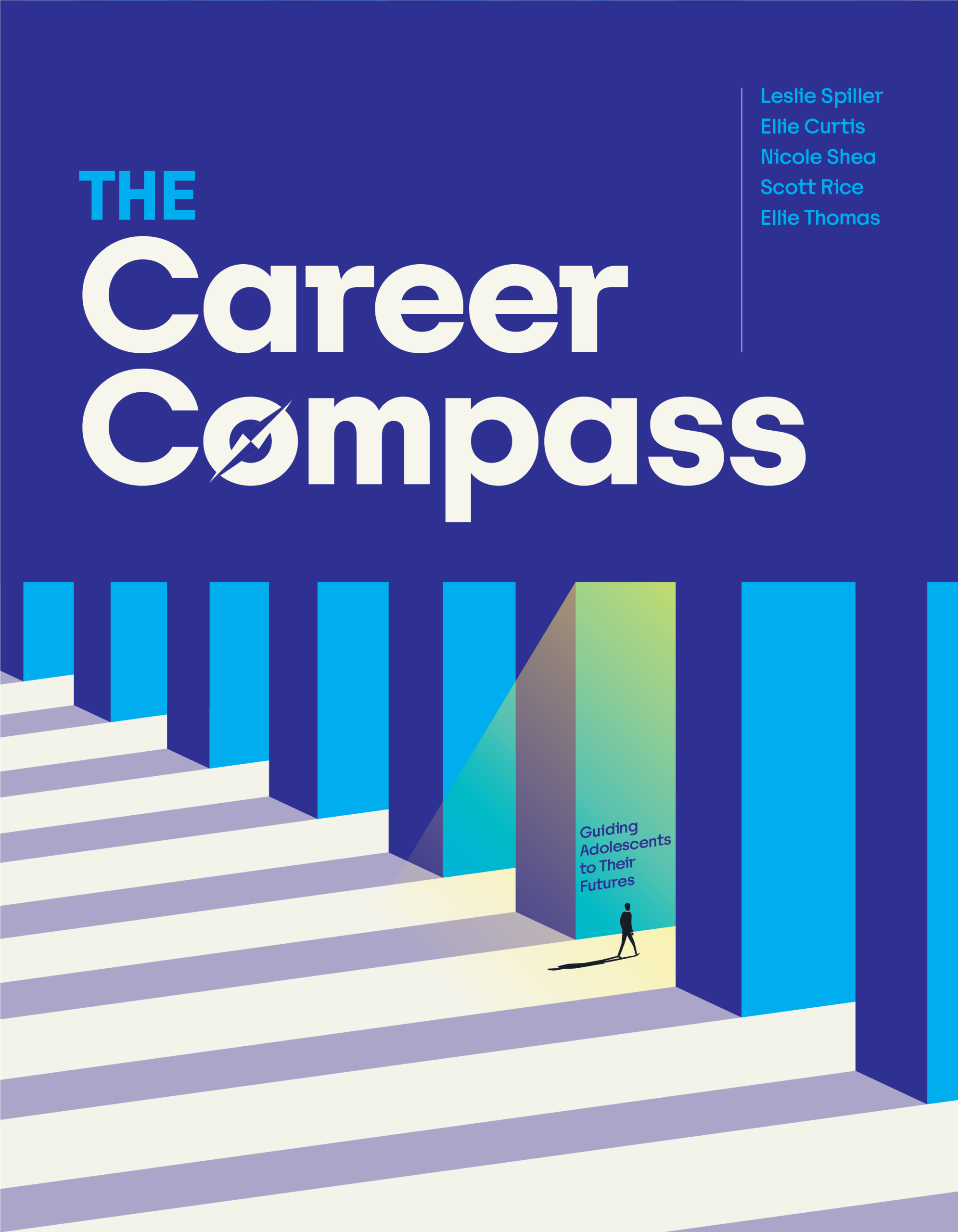
The Career Compass: Guiding Adolescents to Their Futures is a practical, student-centered program designed by active school counselors to help middle and high school–aged adolescents explore their strengths, identify meaningful career pathways, and take confident steps toward life after graduation.
Developed by a team of five practicing high school counselors, each bringing firsthand experience supporting adolescents through the complexities of postsecondary planning, the program reflects the real needs and challenges students face as they prepare for their futures.
Grounded in positive youth development and evidence-based career readiness practices, The Career Compass provides school counselors and educators with a structured framework for guiding students through self-discovery, reflection, and future planning. Through thoughtfully designed activities and discussions, students learn to connect their personal interests, strengths, and values with real-world opportunities and long-term goals.
This paperback book includes reproducible activities, lesson plans, reflective exercises, and discussion prompts that make it easy to implement in individual counseling, small groups, or classroom settings. These practical tools encourage meaningful student engagement while helping adolescents build the decision-making skills, confidence, and clarity they need to navigate academic choices, career exploration, and postsecondary options.
With its structured yet flexible approach, The Career Compass: Guiding Adolescents to Their Future equips counselors, teachers, and career development professionals to guide students toward informed decisions and purposeful futures.
Book Trailer Video
“The work of school counselors in career development is critical as students navigate a post-secondary landscape that is constantly evolving. Choosing an appropriate path to career satisfaction and success is complex and requires a personalized and intuitive approach. The Career Compass is a tool that gives school counselors the opportunity to put high school students on this path in a way that is engaging, age-appropriate and well-informed. The potential impact for students and their families as they make decisions about life after high school is tremendous. I am excited to use The Career Compass as a resource to do the work that professional secondary school counselors are meant to do!”
– Valerie Tucker, M.Ed, Professional School Counselor, Certified GCDF (Global Career Development Facilitator)
“Career Compass creates a great environment for students and group leaders to explore all facets of career exploration. It covers all the bases while also showing connections to examples that students will connect with their own experiences. I can’t wait to dive in and start my own group with students who need help exploring careers.”
– Jeremiah Avise-Rouse, Clinton High School Counselor
“The Career Compass encourages students to be more open and curious about their futures…I’ve heard countless stories about how a teacher influenced students in a positive way through encouragement that led to their career.”
– Laura Kestner-Ricketts, Executive Director, Career & Professional Development. Augustana College
In this author spotlight, Leslie Spiller, Ellie Curtis, and Nicole Shea share their insights into the book and the importance of guiding adolescents as they explore their future career paths.
- What inspired you and your coauthors to create The Career Compass?
Leslie Spiller: There were a lot of different experiences and connections that led us to create The Career Compass. First, our team has always been passionate about postsecondary and career readiness. So much that we realized that our students needed to have more opportunities to learn all that goes into this process. This lead us to creating, proposing, and implementing a Tier 1 Career and College Readiness Seminar this required for all of our students. Each of our students takes this course that focuses on career and self exploration all the way to submitting applications and financial aid. We developed the curriculum as we went based on our experience, feedback from students, and feedback from educators.
We know we are so lucky to have so much support and time to create this program and be in front of every student each year they are in school about their future. I am not sure we realized what we were taking on in this process and how much we really developed until you put it all together. It was a challenge and something we are really proud of. This led to us being approached to create a curriculum that would allow other educators to take what we have learned over the years to provide lessons that would be flexible to adapt to their school.
We know not everyone gets as much time in front of students as us, so we want to make sure that when they do, they are able to do it with confidence and not worry about developing their own curriculum.
Nicole Shea: The inspiration came from our substitute counselor Gay Dunn, who worked with us while Ellie Curtis was out on maternity leave. She saw the work we were doing with our students every day and encouraged us to write a book to share with our counselors/educators to use in their own schools.
Ellie Curtis: We were inspired by longitudinal data that showed that many students and particular student subgroups were not completing a postsecondary credential within six years after high school graduation. Counselors knew we needed to do something different with our program to improve student postsecondary outcomes, but school counselors typically don’t have enough time in front of students to deliver important information in a meaningful way. Yes, we could have individual conversations with every student, but that is not feasible with 1800 students and 5 school counselors. This is when we proposed a course model and curriculum to the school board. The course is now a graduation requirement for all students. We’ve seen meaningful improvement in our six-year post-graduation data which prompted us to create The Career Compass for other educational professionals.
- What gap did you see in career readiness resources that this book aims to fill?
Leslie Spiller: In our experience, much of the career curriculum that is out there is through Career Information Systems that have built in lessons through an online program. We relied on this heavily when we first started because it was easy and could check a box. We realized quickly though that students get burned out from using that system throughout high school and sometimes even start in middle school. We found more success when we created activities and allowed students to do physical activities and connect/discuss with other students. Additionally as schools, parents, and districts begin to worry about screen time, we wanted to provide a program that could be used with minimal screen time if that is what you are looking for. I think that The Career Compass also provides a clear cycle through the process that we feel is successful for students. It isn’t do this stand-alone activity, they are connected and actively have them make the connection between what they learn about themselves and what that could mean for picking a career
Nicole Shea: You don’t really see much for career readiness resources at the high school level. As a previous elementary counselor, there are tons of lessons and ideas to implement with younger children to expose them to careers. Thinking about a career in high school is at a much different level and the majority of high school students need guidance on how to choose a career. So many factors go into choosing a career that high schoolers are not aware of so teaching them these factors is important, so they go down a path that fits them best.
- How has your experience as practicing school counselors shaped the program?
Leslie Spiller: As stated before, we run a Tier 1 Career and College Readiness Seminar that is required for all of our students all 4 years. We see everyday what are students know, what they don’t know, and what they need. We have been able to try different activities with students to see the impact and receive feedback. We’re doing the work with students, so we understand what it is like to get this important information to students.
Ellie Curtis: Time is limited and valuable in most professions, but especially for school counselors, most of whom have caseloads of students who far exceed the recommended ratio of 250 students to one school counselor. School Counseling graduate programs emphasize the need for school counselors to build systems to support student needs to be as efficient and effective as possible. The Career Compass provides educators with career readiness curriculum that can be delivered and adapted in different settings.
- Why is it important for career exploration to begin during middle and high school?
Nicole Shea: While middle school might seem young to start career exploration, it’s actually essential to begin then and even younger in elementary school. The younger years its more about career exploration and being aware of different careers. Whereas, in middle school it’s really starting to become more self-aware and how that helps you find an ideal career that fits who you are as a person and the lifestyle you want as an adult. Kids are changing throughout middle and high school so its important to keep revisiting careers and factors that influence their decision.
- What are some of the biggest challenges students face when planning for life after graduation?
Nicole Shea: I think one of the obvious answers is money, paying for your program that you’d like to go into. But I think another huge challenge is when students don’t know what career they want and they are unsure of what to do next.
Ellie Curtis: Lack of life experience, work experience, pressure from peers, family, and/or society, and limited exposure to different careers are some of the biggest challenges students face when planning for life after high school. Many students feel they simply do not know themselves well enough to make such a big decision at an early age. They also recognize that what they like now could be different than what they like in 10, 15, 20 years. Or, they have never worked and do not know their preferences for the workplace. By first exploring themselves (personality, interests, skills, lifestyle wants, etc.), students can use that information to meaningfully research careers. Their learning through this curriculum truly becomes the compass for their working life, whether that means staying within the same field for 30-40 years, or pivoting themselves to different careers as they learn more about themselves throughout life. From experience, many students feel so much pressure to choose something that they hastily pick something just to ease that pressure. Rushed and pressured decision-making can lead to students not completing educational programs and not reaching their full potential.
- What do you hope students gain from participating in the activities throughout the program?
Leslie Spiller: We should never expect that students are going to figure out exactly what they are going to do in high school or middle school – I am not sure many of us could say that we knew what we wanted to do when we were thank young (and some of us adults don’t know either now! The important part of students doing this work is so they can learn to reflect on the skills, values, personality, and interests that they have on a consistent basis. Every new experience that a student experiences is a chance for them to learn something new about themselves. Whether it is reaffirming what they already knew, or and something they have never known or realized about themselves. And then to take that information and compare it to careers they learn about and be able to dive deep into those careers to see if they match what is important to them. It is a lifelong cycle that will continue to look different as the world moves forward, but the main skills stay the same. I want students to learn the skills needed to reflect, adapt, change, or move forward no matter where they are in their lives.
Nicole Shea: I hope they gain self-awareness of themselves and how that translates to a career they feel fits them best and the life they envision in the future. Instead of chasing careers that have the highest salary, which is what a lot of high school students are still doing.
Ellie Curtis: We hope students learn more about themselves and their desires for career and lifestyle through the activities. Being able to identify what is important to them and what keeps them interested and motivated helps them see careers through a lens that’s specific to them opposed to relying on generalized information. Many students are not exposed to careers outside of what they see on TV/movies, family, and family friends. Nor do they have meaningful time to reflect on themselves and their futures. These activities solve that problem.
- How can school counselors integrate the program into existing counseling or career readiness efforts?
Leslie Spiller: While we would love people to deliver the curriculum from the first lesson to the last, we know that is not always realistic. I think you have to find places to insert yourself. First, I would try to figure out what/where is there a time that all students are available. For our program, all students took a wellness class every other day and had study hall opposite – that was an easy place to say they will take lessons then. Is there an advisory time that all students have that your staff could provide these lessons? Is there a small group of students that are interested in this as either a course, after school, or lunch group? Talk to other educators about what you are wanting to do and see where it could fit. There are ways to take these lessons and apply them to some of the classes that focus on the future – like CTE courses. I think being creative and viewing it as something that HAS to get done will allow you to not think about if, but more about how.
- What makes the lessons adaptable for different school settings (for example, schools serving different socioeconomic backgrounds or diverse student populations)?
Nicole Shea: Our lessons are very adaptable to diverse populations because it focuses so much on self-awareness. It’s really about taking a deeper look into themselves, strengths & weaknesses, likes and dislikes, goals and lifestyle and using that information to see which careers fit that. It’s not about picking the one career but exploring careers in more depth and exploring careers you didn’t even know existed.
- What advice would you give school counselors who are just beginning to strengthen career readiness programming?
Leslie Spiller: My advice would be to find a person in your district who is in a leadership position and has the authority to address your needs. Once you have a champion in mind, get creative on how you can get in front of students. Whether it is just 5 sessions or a whole class, getting in front of your students with the lessons that will help their futures is so important and worthwhile. My other piece of advice is you know more than you think! Using tools like The Career Compass paired with the education and experience that you have makes you more than qualified and ready to help students!
Nicole Shea: Use our book as a guide and adjust what you need to for your student population. Work with your team and adjust as you go but keep moving forward with it.
Ellie Curtis: Find your champion! Find the stakeholder who will back up your efforts and advocate for your unique but often misunderstood position in schools. Make your delivery model as close to a system as possible. How can your program yield positive outcomes without it feeling like extra work for educators? Collect meaningful data and feedback from students to consistently improve programming.
- Looking ahead, what do you hope The Career Compass accomplishes for students and educators?
Leslie Spiller: I hope this provides educators with the confidence to help students through this process. We have heard time and time again from educators that this is the area that they don’t feel as confident with in helping students through the process. We know educators are amazing and integral in helping students, so we want to provide them a way to help their students that makes their life easier with this curriculum. I hope students learn the importance of the SKILLS involved with this process, not the outcome of “this book told me I should be [insert career]”. That they can become life-long learners to pivot through this every changing world with confidence and are able to find the best career that fits them.
Nicole Shea: I hope it helps educators implement these lessons easily at their school. It will save them time from having to develop or search for lessons. I’m hoping that it is easy to implement for educators and helps students find the path that suits them best.