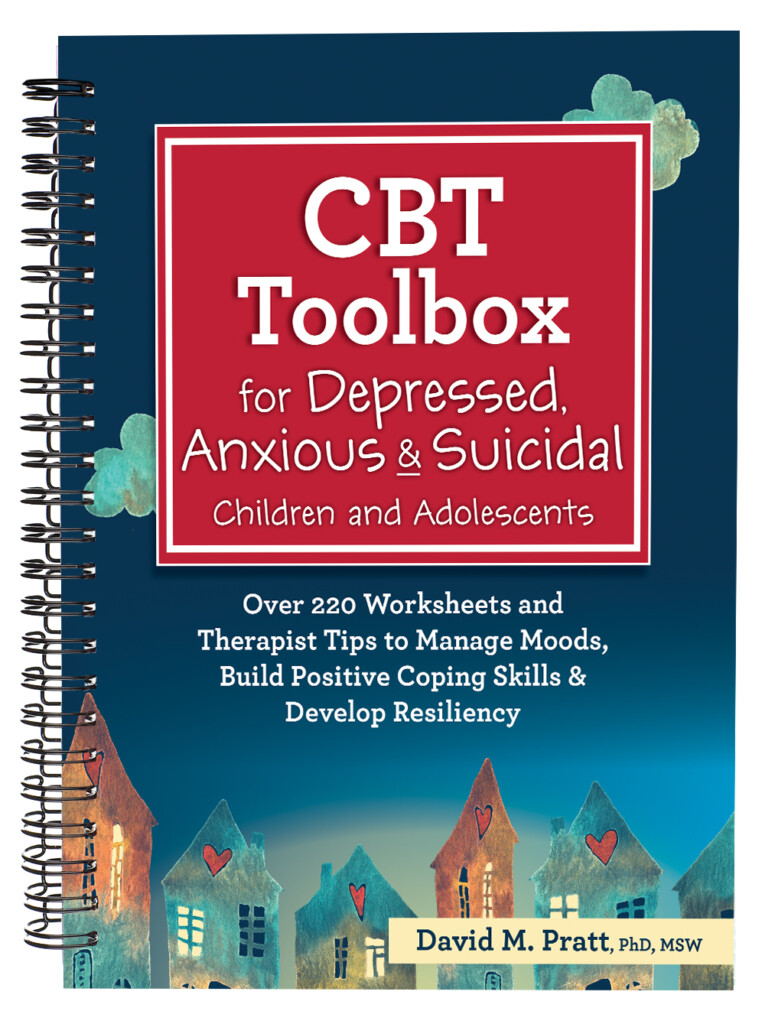
With new case material, expanded pedagogical tools, and updated theory and research, the second edition of this reader-friendly text is an ideal introduction to cognitive-behavioral therapy (CBT) for graduate students and practitioners.
In a witty, empathic style, David F. Tolin explains the “whats,” “whys,” and “how-tos” of addressing the behavioral, cognitive, and emotional elements of clients’ psychological problems. Featuring helpful graphics, vivid examples and sample dialogues, and 39 reproducible worksheets and forms that can also be downloaded and printed, the book concludes with four chapter-length case illustrations.
New to This Edition
- New or expanded discussions of case formulation, transdiagnostic interventions, therapeutic strategies like mindfulness and acceptance, and more.
- Increased attention to cultural competence, intermediate beliefs, and linking conceptualization to intervention.
- Additional chapter-length case example.
Pedagogical Features
- Numerous engaging boxes, including “Try This,” “The Science Behind It,” “Things that Might Bug You about This,” and more.
- New in the second edition—chapter-opening “Essential Points,” “CBT Spotlight” boxes on popular variants of CBT, and end-of-chapter discussion questions.
- Learning worksheets for self-practice of core CBT skills.
- End-of-chapter key terms with definitions.
- Laying Out the Basics
- Why Do People Suffer?
- The Behavioral System and How It Can Go Wrong
- The Cognitive System and How It Can Go Wrong
- The Emotional System and How It Can Go Wrong
- Creating Solid Case Conceptualizations
- How Do We Help?
– Section A. How We Engage the Client
- Therapy Assessment and Case Formulation
- CBT Finesse
– Section B. Behavior-Level Interventions
- Situation Selection and Stimulus Control
- Contingency Management in Therapy
- Direct Behavioral Prescriptions and Graded Task Assignment
- Exposure
- Behavioral Skill Training
– Section C. Cognitive-Level Interventions
- What’s the Client Thinking?
- Restructuring Thoughts
- Leaving Thoughts Alone
- Going Deeper with Intermediate and Core Beliefs
– Section D. Emotion-Level Interventions
- Modulating Emotion
- Distress Tolerance
III. Putting It All Together
- Putting It All Together: William’s CBT
- Putting It All Together: Anna’s CBT
- Putting It All Together: Elizabeth’s CBT
- Putting It All Together: Bethany’s CBT
Appendix A. Further Reading
Appendix B. Tools for the Clinician
References
Index
“The book does a masterful job of integrating the cognitive, behavioral, and emotional aspects of CBT into a balanced treatment that maximizes client outcome….The book’s straightforward style with refreshingly open opinions about the author’s approach to CBT and user friendly, step-by-step structure makes it an essential training tool for graduate students. This theoretically grounded, research informed, comprehensive text makes a good reference book for scientists. Finally, its vivid instructive case examples make it a valuable resource for practitioners and instructors. In summary, Doing CBT is an excellent ‘go-to’ resource for professional practice, consultation, and graduate level training.”
—Journal of Contemporary Psychotherapy (on the first edition)
“Tolin has accomplished something few others have managed to do—he has written a CBT book that is comprehensive yet highly readable and accessible. If you are wedded to an evidence-based approach to helping individuals change maladaptive patterns of thinking, feeling, and behaving, look no further than this terrific resource. Students and clinicians will find virtually everything they need to know about doing CBT, from key conceptual foundations to hands-on practical material and illustrative examples. Like the first edition, the second edition will occupy a prominent space on my bookshelf and will be the first resource I lend out to the students I supervise.”
—Jonathan S. Abramowitz, PhD, Professor and Director, Clinical Psychology PhD Program, University of North Carolina at Chapel Hill
“I was looking for a text that comprehensively taught and illustrated the full toolbox of CBT techniques and the theories behind them, and I was very glad to find this one. Like the first edition, the excellent second edition will be perfect for my graduate-level CBT course. It is focused broadly on the principles of change and is a great primer for anyone interested in learning how to apply CBT flexibly and effectively.”
—Michelle G. Newman, PhD, Department of Psychology, The Pennsylvania State University
“Few if any texts discuss and demonstrate the breadth of CBT interventions that this one does. This book covers a wide range of techniques, provides specific details on implementation, and includes an impressive array of client handouts, which my students and I use often. This is a ‘must read’ for experienced and novice practitioners, including graduate students or interns learning psychotherapy. The writing is clear, and it is a pleasure to read. I have used the first edition in my practicum courses, and it provides my students with both theoretical and practical knowledge. After reading a chapter on intervention, they are ready to try it!”
—Raymond DiGiuseppe, PhD, ABPP, Department of Psychology, St John’s University
“This is my all-time favorite resource for CBT case conceptualization and treatment planning! Experienced clinicians and trainees alike will find this book to be a highly engaging (and often funny) treasure trove of information and practical clinical strategies. I have been using the first edition in my graduate seminars, in clinical supervision, and with my own clients for years. The welcome second edition provides the best from the original work along with new case examples and additional resources. Every CBT therapist, trainer, and supervisor should have and use Doing CBT as part of their professional toolbox.”
—Ann M. Steffen, PhD, ABPP, Department of Psychological Sciences, University of Missouri–St. Louis