
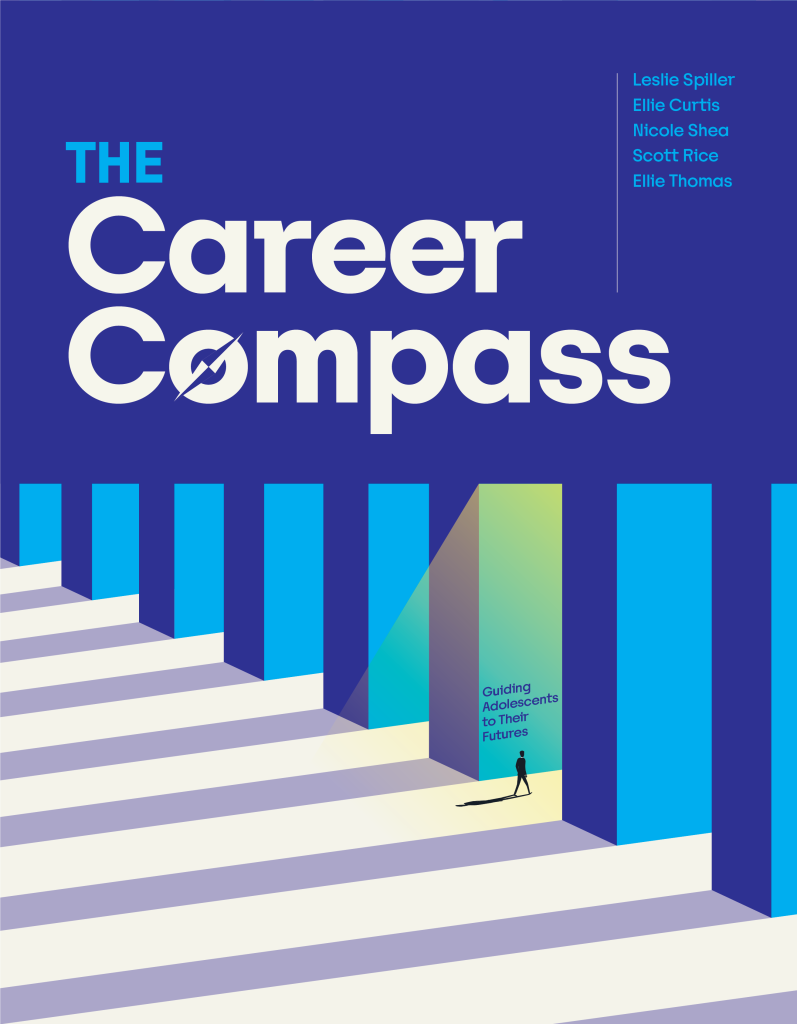
Written by Ellie Curtis, Scott Rice, Nicole Shea, Leslie Spiller, and Ellie Thomas
Reading the article in Education Week titled “Do Schools Put College Prep and CTE on Equal Footing? We Asked Educators” by Alyson Klein has our team reflecting on our unique journey of creating a tier 1 postsecondary readiness curriculum. We know how important it is to provide students with structured time to explore what we call “postsecondary pathways,” which encompasses any education or training beyond high school.
We know students and families’ perceptions and experience may influence their decision. These experiences and perceptions, when combined with community expectations, create an opportunity for additional learning and reflection on what postsecondary pathway will help students achieve their personal and professional goals.
As a team of five school counselors, we attended a conference digging into postsecondary outcome data. Our data showed high postsecondary intention rates, but the persistence and completion rates reported by the National Student Clearinghouse were concerning. We knew that if we wanted to make a significant impact on this data and the outcomes of our students, we would need to go “big.”
Going “big” presented a challenge. Like many school counselors across the country, we were only permitted access to classrooms once or twice a year to present on course selection and other topics related to postsecondary planning. With the support of our school district, we created the infrastructure to set up and deliver high-quality career and postsecondary planning that would make a meaningful difference for all students. Thus, our journey of creating our Adolescent Career Development Curriculum began.
When developing our curriculum, one of our main focuses was on students exploring and choosing a postsecondary pathway that fits them best, with no pathway being better than the other. The goal is to explain all postsecondary options to students to find the best fit for the individual rather than just assuming that students know what postsecondary option is best for them.
Before students choose a postsecondary pathway, which may include CTE or college prep, our goal is to have students learn about themselves and then learn how to research and evaluate a career option through a lens of questions and concerns that are important to them. Our curriculum focuses on two parts of Adolescent Career Development.
One is Exploring Self: Interests & Passions, Values, Personality & Skills. This exploration may lead to some career ideas and some non-negotiables when it comes to what a student needs in their career.
Second, we explore Career Elements, which encompass parts of a career that may be important to them: Job Duties, Career & Lifestyle Fit, Education & Advancement, and Career Demand & Changes. Evaluating what Career Element is most important helps students to research careers and see how it fits with what they believe to be the most important elements for them. Beginning this work with students early on during high school allows our team of school counselors to guide students and families in selecting courses that allow them to explore careers and courses that prepare them for their intended postsecondary pathway. This often includes CTE coursework.
The main mission of our work is to teach self-awareness skills so students are constantly learning from their experiences as they move forward. Career development is not a linear path with a fixed end goal, but rather a lifelong skill that will allow individuals throughout their life to evaluate, pivot, and adapt as they change.
About the Authors
The authors work as school counselors in the Quad Cities, Iowa.
We are pleased to share this guest post from a team of practicing school counselors who bring real-world insight into adolescent career development and postsecondary readiness. Their work aligns with a new adolescent career development resource currently in development at Research Press. We are excited about how this upcoming publication will support meaningful career exploration and informed postsecondary decision-making for students.
Preorder your copy of The Career Compass today!
At Research Press, we are committed to supporting educators and counselors with practical, research-informed resources that help students thrive.